
How to Ride Motocross Ruts: Entry, Balance, Vision and Exit
A repeatable approach to deep ruts that helps riders stop fighting the groove and start using it as a line.
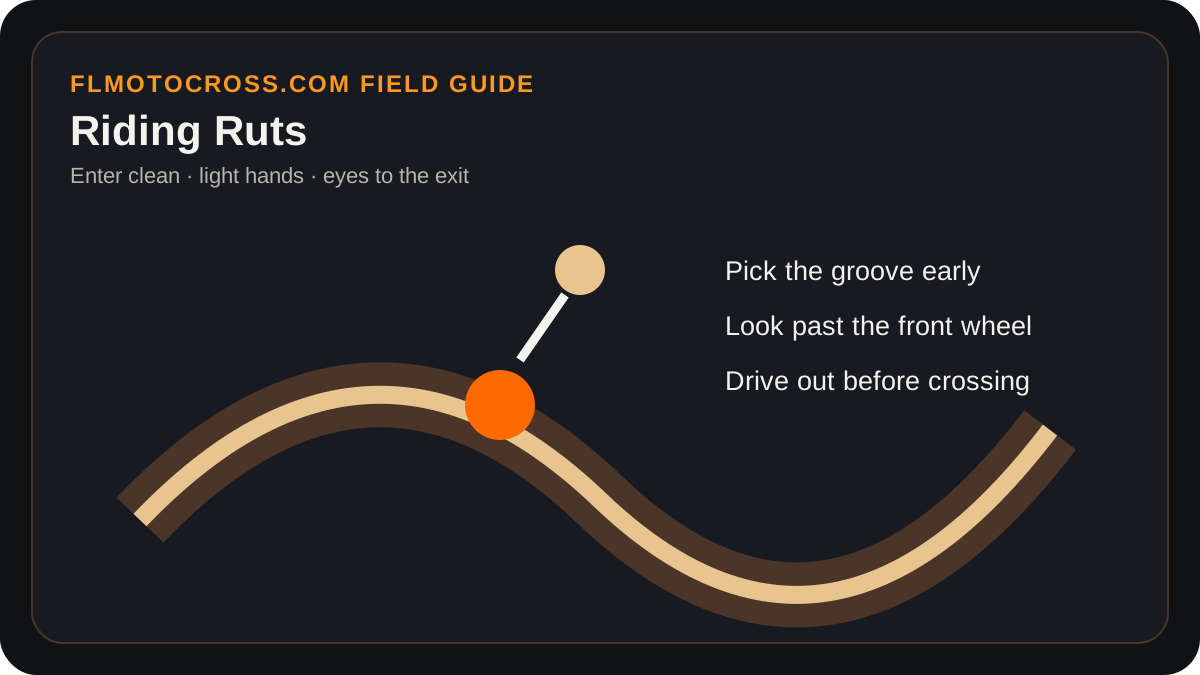
Commit to the rut before you arrive
A rut becomes difficult when the rider changes their mind at the entrance. Approach on a line that lets both wheels enter cleanly rather than clipping the edge at an angle. Scan the rut early for holes, crossed lines, collapsed walls or a sharp exit. Once the wheels are in the groove, sudden steering corrections can climb the wall and upset the bike.
If the rut is damaged or beyond your skill level, choose another line before entry. There is no prize for forcing a deep rut during practice when a safer line exists.
Control speed early
Do the majority of braking while the motorcycle is upright and stable. Release braking progressively as the bike enters the rut so the front suspension is not overloaded at the point where the groove is already steering the tire. A small amount of controlled brake can still be used when appropriate, but panic braking mid-rut often creates the exact instability the rider was trying to avoid.
Choose a gear that avoids an unnecessary shift in the deepest part of the rut. Smooth drive is easier to manage than a clutch, shift and body-position change all at once.
Look farther than the front wheel
The rut gives your tires a path, but your vision still needs to lead. Look toward the middle and exit instead of staring at the rut wall beside the front axle. When riders look down, they tend to overcorrect every small movement and lose awareness of where the groove goes next.
Keep your hands light enough that the front wheel can follow the channel. The goal is not a loose grip with no control; it is avoiding a death grip that prevents the bars from making small natural corrections.
Use body position to stay centered over the contact patch
Balance changes with rut shape. In a banked rut, the motorcycle may lean significantly while your body stays positioned to keep pressure through the tires. Keep the outside leg supportive and avoid letting the inside foot drag far behind, where it can catch the ground. If you use the inside leg, keep it forward and ready rather than using it as a skid.
As the rut exits, allow the bike to stand and drive forward before making the next big direction change. Many rut crashes happen after the hardest part is over because the rider rushes the exit and crosses the rut wall.
Practice shallow to deep
Learn on a shallow predictable rut first. Once you can enter, hold line and exit without looking at the front wheel, move to deeper grooves. This progression builds trust in the front tire and reduces the urge to steer out of the channel.
Ruts evolve quickly on Florida tracks after watering or rain. Re-evaluate them every session; a clean groove in the morning can hide holes by afternoon.
Track-specific rules always win
Use this guide as preparation, then follow the riders’ meeting, posted rules and staff instructions at the facility you visit. Conditions and operating procedures vary by track and event.
Related rider guides
How to make a dirt bike calmer and more predictable in Florida sand without chasing random setup changes.
A technique-focused guide to entry speed, body position, throttle and line choice when deep sand makes the front end feel vague.
Technique and setup cues for repeated bumps entering corners, with emphasis on braking control and letting suspension recover.
A conservative introduction to whoop sections that focuses on repeatable rhythm before speed.