
Cornering in Florida Sand: Motocross Technique for Maintaining Momentum
A technique-focused guide to entry speed, body position, throttle and line choice when deep sand makes the front end feel vague.
Why sand corners feel different
Sand moves under the tires, so the motorcycle rarely gives the same sharp steering feedback you get from a firm surface. The front can hunt while the rear digs, especially when speed falls. New riders often respond by closing the throttle, sitting rigidly and steering harder with the bars; that combination removes momentum and makes the bike sink deeper. The useful mindset is to accept some movement and guide the motorcycle with body position, vision and steady drive.
Before changing technique, read the corner. Is there a berm with support, a deep rut, a flat loose center or a firmer outside line? Sand corners develop quickly, and the fastest-looking rut may be too deep or broken for your current pace. Choose a line you can repeat rather than entering every lap with a different plan.
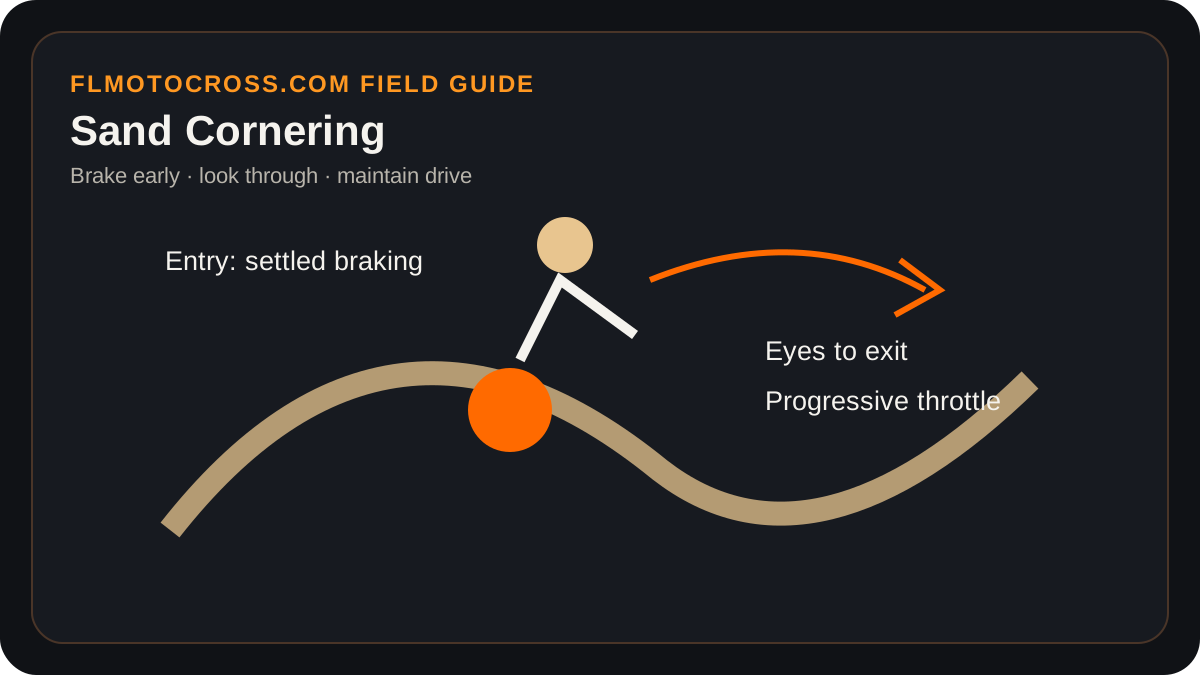
Brake while the motorcycle is settled
Do most heavy braking before maximum lean. In deep sand, abrupt braking while the front is already loaded can make it knife or bury. Enter with enough control that you can release brake pressure progressively as the bike begins the turn. The goal is not zero braking in the corner; it is avoiding a panic input that collapses momentum and overloads the front tire.
Use both brakes as appropriate for your skill and the corner, and practice the transition at moderate speed. A smooth release is often more important than the exact braking point. If the bike stands up or dives every lap, work on the transition before chasing suspension settings.
Let the motorcycle lean beneath an active body
Keep your upper body balanced and mobile rather than hanging rigidly from the bars. On a flatter sandy corner, riders often keep more body weight toward the outside while the motorcycle leans underneath, using the outside leg and peg to support the chassis. In a deep supportive rut, the body and motorcycle may align differently. The common principle is allowing the bike to move without your arms becoming steering struts.
Look through the corner toward the exit. Riders who stare at the front fender tend to react late and tighten their grip. Vision helps your hands stay quieter because the body is preparing for the next point rather than correcting the last wiggle.
Use throttle to maintain drive, not to rescue a stopped bike
A steady or progressively opening throttle helps keep the rear tire driving and the chassis moving across loose material. Waiting until the bike nearly stops and then snapping the throttle can create wheelspin, push the front or force extra clutch work. Try to preserve enough entry momentum that throttle is a continuation of the corner rather than an emergency recovery.
The correct gear should let the engine respond without constant shifting at maximum lean. If you are always between gears in one corner, note it and evaluate gearing after technique becomes consistent.
Practice one corner type at a time
Choose a safe session where you can focus on one sandy corner without racing other riders. Repeat the same line, change one element—entry speed, braking release or body position—and judge whether the exit becomes smoother. Do not measure improvement only by how sideways the bike feels; measure whether you can hit the same rut, maintain drive and exit with less correction.
As the track roughens, the ideal line may move. Technique includes recognizing when the original rut has developed a square edge, hole or collapsing berm and choosing a new line before it becomes a problem.
Primary references
Track-specific rules always win
Use this guide as preparation, then follow the riders’ meeting, posted rules and staff instructions at the facility you visit. Conditions and operating procedures vary by track and event.
Related rider guides
How to make a dirt bike calmer and more predictable in Florida sand without chasing random setup changes.
A repeatable approach to deep ruts that helps riders stop fighting the groove and start using it as a line.
Technique and setup cues for repeated bumps entering corners, with emphasis on braking control and letting suspension recover.
A conservative introduction to whoop sections that focuses on repeatable rhythm before speed.