
Motocross Braking Bumps: How to Stay Balanced When the Track Gets Rough
Technique and setup cues for repeated bumps entering corners, with emphasis on braking control and letting suspension recover.
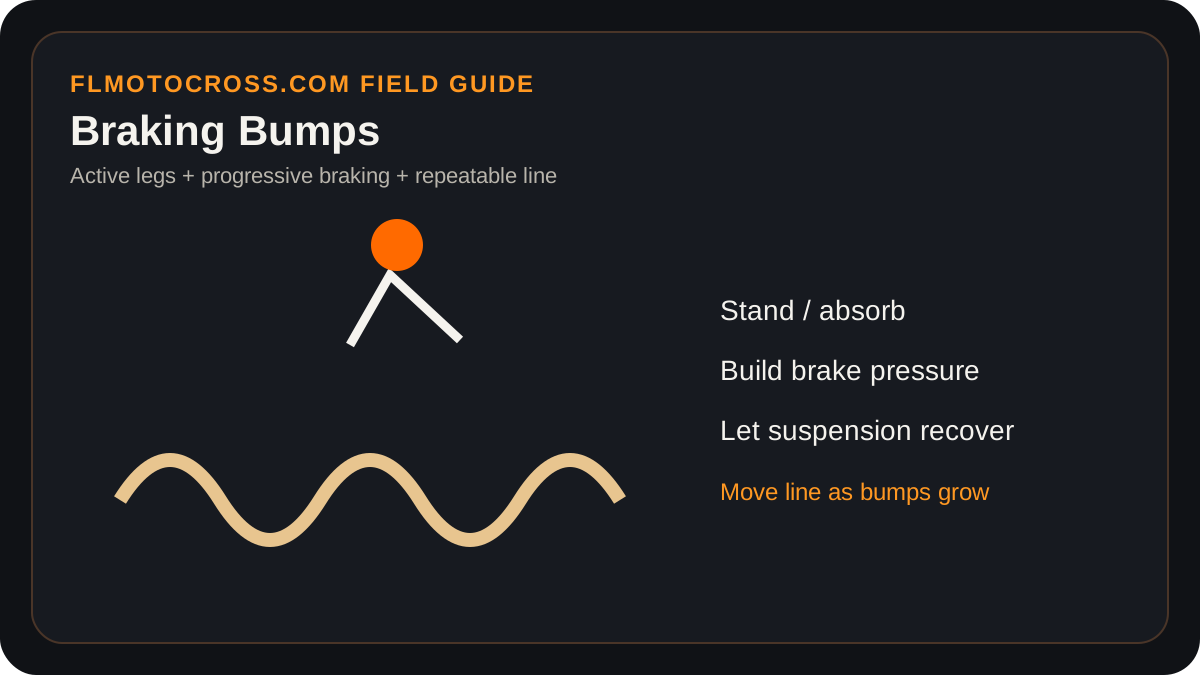
The problem is repeated impacts under deceleration
Braking bumps combine two difficult jobs: the suspension is cycling through repeated impacts while weight is transferring forward. If the rider brakes too abruptly, locks the rear, sits rigidly or grips the bars tightly, the bike has less freedom to follow the terrain. The goal is to create a stable platform before the bumps and keep inputs progressive through them.
First decide whether the fastest line is actually the roughest line. A smoother outside path can preserve more corner-entry speed than charging straight through a destroyed center line.
Stand and use your legs as additional suspension
When practical for the section, stand with knees and hips active and elbows up. Let the bike move beneath you while your torso remains comparatively calm. Your legs absorb movement that would otherwise transfer directly into your upper body and bars. Avoid locking knees or hanging your weight entirely on the handlebar.
Keep pressure through the footpegs and maintain a neutral fore-aft position that matches braking force. Moving slightly rearward under harder braking can help balance, but sitting over the rear fender with straight arms reduces control.
Brake progressively and keep the wheels rolling
Build braking pressure instead of grabbing it. The front brake provides strong deceleration when traction is available, but abrupt pressure on a bump face can overload the tire. Use the rear brake smoothly; a locked rear wheel can skip across bumps and reduce directional control.
Release braking as the corner requires rather than carrying one fixed pressure through every bump. Practice on a repeatable section at a pace that lets you feel wheel contact instead of simply surviving the impacts.
Recognize suspension symptoms accurately
If the rear kicks upward after each bump, rebound may be too fast, the rider may be too far forward, or braking input may be unloading the rear. If the rear progressively rides lower and gets harsher through the series, rebound may be too slow and packing. The same “rough” feeling can therefore require opposite damping changes.
Use your setup log. Change one adjuster in small steps only after technique and tire condition are consistent. If the suspension is overdue for service, clicker conclusions may be unreliable.
The line changes as bumps grow
Braking bumps migrate and deepen through a day. Scan for a line where peaks are offset or the surface has not been chopped as severely. Sometimes moving half a bike width creates a much cleaner path.
Do not cross sharply through another rider’s line without checking traffic. Practice-day etiquette still applies when searching for a smoother entry.
Track-specific rules always win
Use this guide as preparation, then follow the riders’ meeting, posted rules and staff instructions at the facility you visit. Conditions and operating procedures vary by track and event.
Related rider guides
How to make a dirt bike calmer and more predictable in Florida sand without chasing random setup changes.
A technique-focused guide to entry speed, body position, throttle and line choice when deep sand makes the front end feel vague.
A repeatable approach to deep ruts that helps riders stop fighting the groove and start using it as a line.
A conservative introduction to whoop sections that focuses on repeatable rhythm before speed.