
Motocross Jumping Fundamentals: Approach, Takeoff, Air and Landing
A conservative jumping framework for riders who already control the motorcycle on the ground and want to build repeatability without rushing progression.
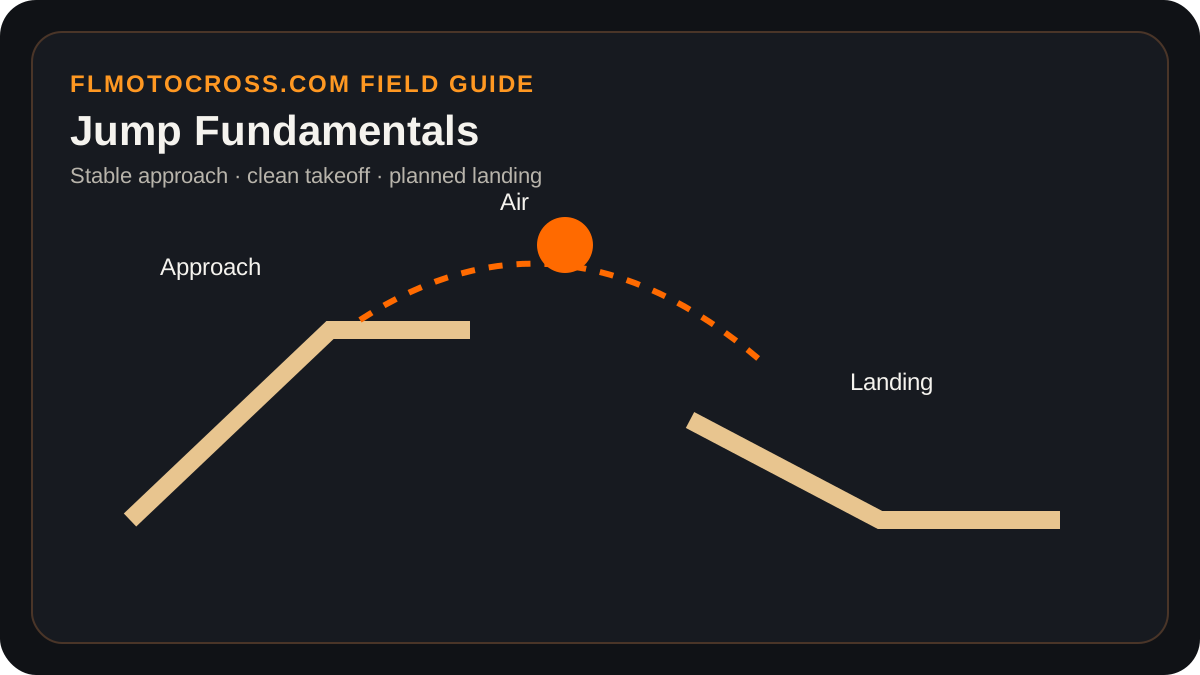
Jumping starts before the face
A safe jump begins with a predictable approach. Choose a straight line, stable gear and throttle position early enough that you are not shifting, braking hard or weaving at the base of the face. If the approach is rutted or rough, solve that first; a perfect takeoff technique cannot fix entering the face sideways.
New riders should begin on small forgiving jumps with clear landings and coaching when available. Do not learn by following a faster rider blindly because their speed, suspension and technique may be completely different.
Use a balanced attack position
Approach standing with knees and elbows active, head forward enough to stay connected to the front of the bike but not hanging over the bars. Keep feet secure on the pegs. The exact position changes with jump shape, but the rider should be able to let the motorcycle move without collapsing into the seat or pulling hard on the bars.
Keep the bike straight up the face unless the jump and skill level intentionally require another technique. Small steering corrections on a jump face can become large direction changes in the air.
Throttle changes pitch
Engine torque and rear-wheel acceleration can influence pitch in the air, while rear braking can slow wheel rotation and influence the chassis in the opposite direction. These corrections require practice and are not a substitute for a clean takeoff. Learn them under qualified coaching before relying on them to rescue bad jumps.
The safest correction is prevention: consistent speed, body position and throttle at takeoff. If every jump requires a dramatic mid-air correction, the approach needs work.
Look at the landing, not the front fender
As the bike leaves the face, move your vision to the landing and next section. Keep joints flexible rather than locking arms and legs. Prepare to absorb landing force through the suspension and body. Land with the motorcycle aligned with the direction of travel.
If the landing is blocked, damaged or beyond your comfortable distance, do not jump it. Practice days are for progression, not proving that every obstacle must be cleared.
Progress by repeatability
Clear a small jump consistently before adding speed or moving to a larger obstacle. A useful progression is one where ten approaches look similar, not one where a rider survives one big attempt. Fatigue and changing track faces can alter required speed, so reassess throughout the day.
If possible, use a reputable motocross school or coach. Direct observation catches body-position and throttle mistakes that are difficult to diagnose from memory after the lap.
Primary references
Track-specific rules always win
Use this guide as preparation, then follow the riders’ meeting, posted rules and staff instructions at the facility you visit. Conditions and operating procedures vary by track and event.
Related rider guides
How to make a dirt bike calmer and more predictable in Florida sand without chasing random setup changes.
A technique-focused guide to entry speed, body position, throttle and line choice when deep sand makes the front end feel vague.
A repeatable approach to deep ruts that helps riders stop fighting the groove and start using it as a line.
Technique and setup cues for repeated bumps entering corners, with emphasis on braking control and letting suspension recover.