
Motocross Standing Position: Build a Neutral Base Before Chasing Advanced Technique
A foundational body-position guide for braking bumps, sand, ruts and rough straights.
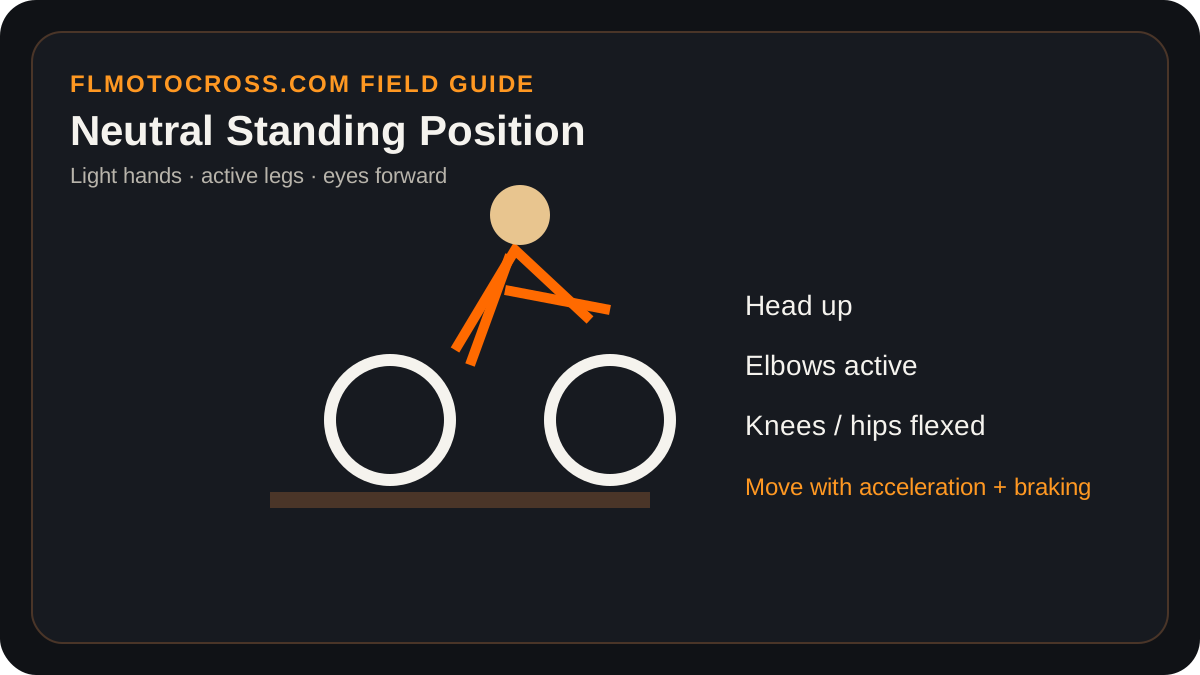
Neutral means ready to move
A useful standing position is not one frozen pose. It is a balanced base that lets the rider move forward, rearward and side to side without pulling on the bars for support. Feet stay secure on the pegs, knees and hips remain flexed, elbows are active and the head is up. The motorcycle can move beneath the rider instead of carrying the rider rigidly with every bump.
Exact body location changes with acceleration, braking and terrain. “Attack position” should not become a photograph the rider tries to hold for an entire lap.
Support weight with legs and pegs
If your forearms are exhausted after two laps while legs feel fresh, you may be hanging on the handlebars. Practice standing on flat ground with light hands, then transfer that feeling to easy sections of the track. The bars guide and control; they should not be the primary place holding your body up.
Grip the motorcycle with the lower body as appropriate without locking knees. Excessive squeezing can be as tiring as no control at all.
Move with acceleration and braking
Under acceleration, allow the body to shift so you resist rearward force without straight arms. Under braking, move enough rearward to stay balanced while keeping control over the front. These are continuous adjustments, not two fixed positions.
Practice smooth transitions before adding rough terrain. If you sit down every time the throttle changes, the standing base is not yet automatic.
Vision organizes the rest of the body
Looking farther ahead lets the body prepare before the wheels reach an obstacle. When the rider looks down, weight shifts and corrections happen late. Choose a point farther through the section while still using peripheral vision for immediate terrain.
This is especially important in Florida sand where the front wheel can move around. Watching every twitch increases upper-body tension.
Use video to check, not imitate
A short side-view video can reveal locked elbows, straight knees or a head that never moves forward under braking. Compare your movement to the problem you are solving rather than copying a professional rider’s exact posture from a different bike and speed.
If possible, work with a qualified coach who can observe from several angles. Small timing changes are difficult to feel from the seat.
Primary references
Track-specific rules always win
Use this guide as preparation, then follow the riders’ meeting, posted rules and staff instructions at the facility you visit. Conditions and operating procedures vary by track and event.
Related rider guides
How to make a dirt bike calmer and more predictable in Florida sand without chasing random setup changes.
A technique-focused guide to entry speed, body position, throttle and line choice when deep sand makes the front end feel vague.
A repeatable approach to deep ruts that helps riders stop fighting the groove and start using it as a line.
Technique and setup cues for repeated bumps entering corners, with emphasis on braking control and letting suspension recover.