
Motocross Tire Pressure and Setup Logging: How to Tune Without Guessing
A process for testing pressure, sag and clicker changes without losing your baseline.
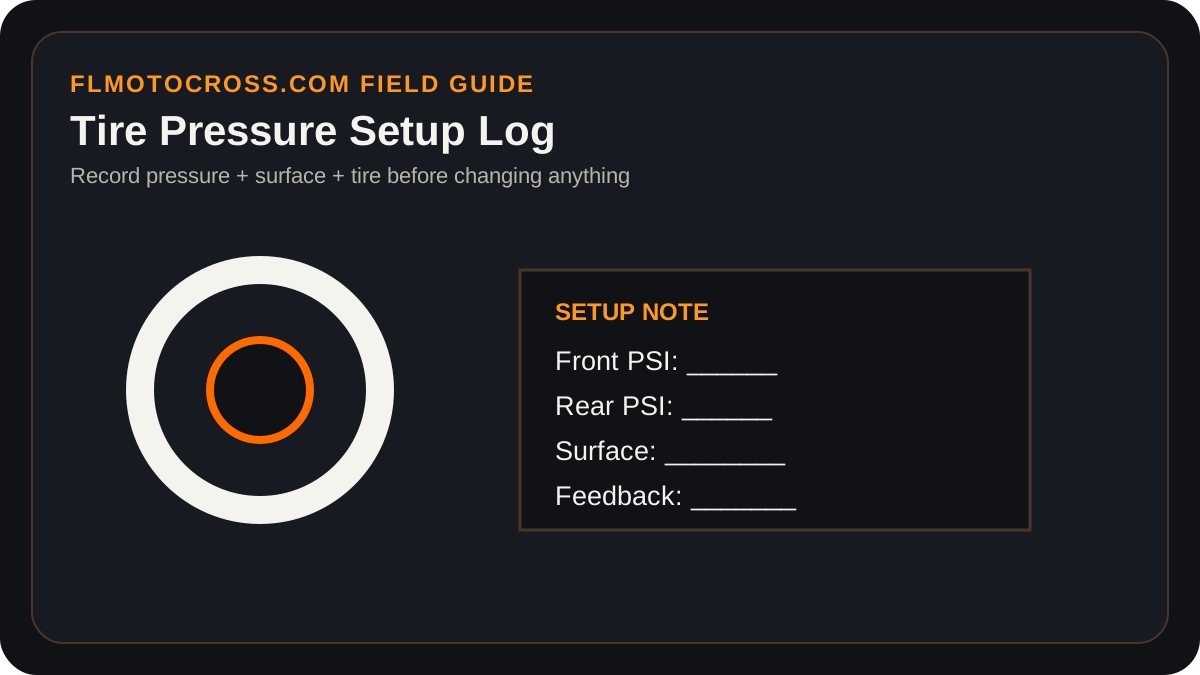
Record the baseline first
Write down front/rear pressure, rider sag, spring information if known, fork and shock clicker positions, gearing and tire model before changing anything. If you cannot return to the baseline, you cannot tell whether the change helped.
Change one variable
Make one small change and ride enough laps to evaluate it on the same sections. Changing front pressure, fork compression and rear rebound simultaneously creates a result you cannot diagnose.
Compare conditions
Track condition belongs in the notes. A setup that felt excellent in damp morning loam may feel harsh or vague after the track dries and develops square-edge bumps. The value of a setup log is context, not just clicker counts.
Use repeatable measurements
Use the same tire gauge and the same sag measurement method. Small tool/method differences can be larger than the adjustment you are trying to evaluate.
Save it on this site
The Bike Setup Log tool stores entries locally in your browser so you can keep multiple track/condition notes without creating an account.
Record before you adjust
Tire pressure changes with temperature, gauge variation and casing choice, so the useful habit is consistency. Use the same reliable gauge, measure at the same point in your routine, record the tire model and condition, and write down the pressure before changing it. Without a baseline, a later 'better' setting is mostly memory.
Do the same for suspension clickers, fork height, sag and gearing. A setup log is most valuable when it can tell you exactly what the motorcycle had when it felt good—or bad—at a particular track and condition.
Change one variable at a time
When possible, make one meaningful adjustment, ride enough laps to evaluate it, then record the result. If you change tire pressure, fork compression, shock rebound and gearing together, you may improve the bike but learn nothing about which change mattered.
Describe behavior rather than using only words such as 'bad.' Note where it happens: front pushes in flat corners, rear kicks on braking bumps, bike stands up under throttle, engine needs another gear before a jump, or the rear spins in a particular soil condition. Specific observations make the next adjustment more rational.
Pressure is not a universal target
Different tire constructions, tubes/mousse systems, rim sizes, rider weights, speeds and surfaces require different approaches. Use the motorcycle/tire/suspension provider's guidance and avoid treating somebody else's online PSI number as a specification for your bike.
The setup-log tool stores your notes locally in the browser so you can compare trips. It is a recordkeeping aid, not a recommendation engine; the rider remains responsible for verifying that every setting stays within safe equipment limits.
Track-specific rules always win
Use this guide as preparation, then follow the riders’ meeting, posted rules and staff instructions at the facility you visit. Conditions and operating procedures vary by track and event.
Related rider guides
A controlled setup approach for Florida deep sand that emphasizes baseline, traction and rider feedback instead of random clicker changes.
How to approach traction, tire pressure, braking stability and suspension feedback when a Florida surface becomes firm, polished or slick.
Understand the jobs of springs, sag and damping so setup changes answer a specific symptom instead of becoming random clicker movement.
A step-by-step sag measurement process that emphasizes repeatable reference points and model-specific targets.