
Deep-Sand Motocross Bike Setup: What to Change and What to Leave Alone
A controlled setup approach for Florida deep sand that emphasizes baseline, traction and rider feedback instead of random clicker changes.
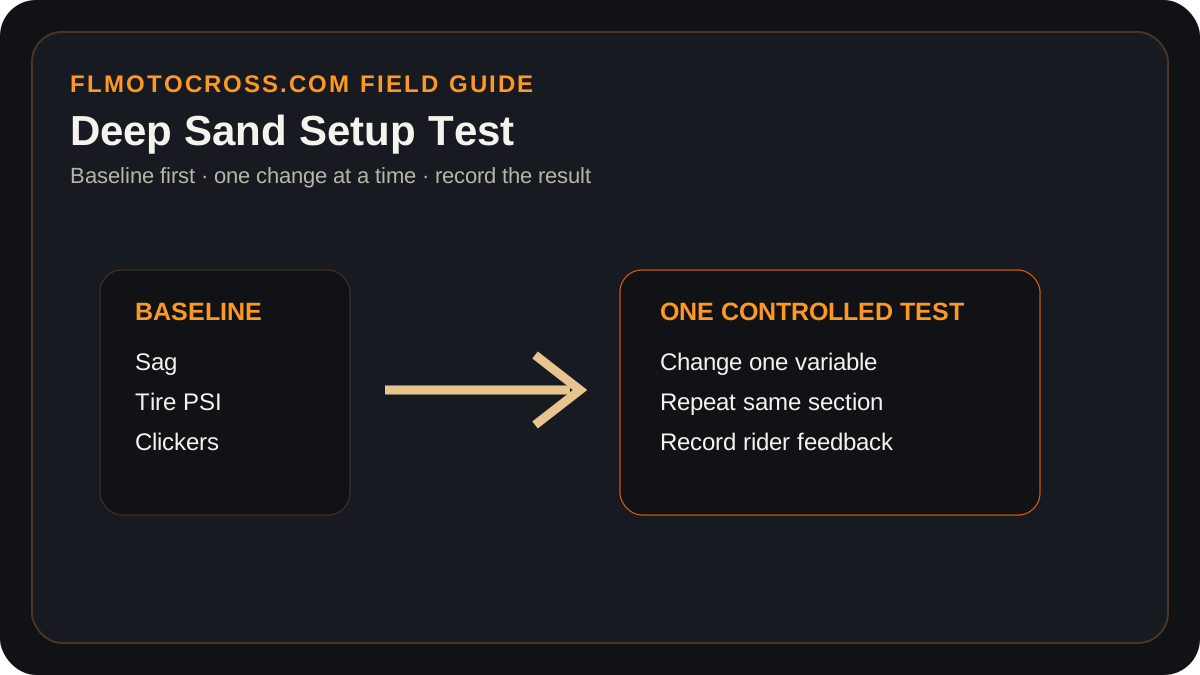
Start from a known baseline
Deep sand makes almost every motorcycle feel busier, so it is tempting to change tire pressure, fork compression, shock compression, rebound, sag and gearing all at once. That destroys the ability to learn. Record the current setup first—tire pressures, sag, fork/shock clickers, fork height, sprockets and conditions—then make one meaningful change at a time.
If the motorcycle has never been set to correct spring rates and sag for the rider, solve that foundation before chasing sand-specific clickers. Clickers compensate within a range; they do not turn an inappropriate spring or incorrect sag into a balanced chassis.
Sand needs momentum and stability
The front tire naturally hunts more in deep sand. Riders often make the problem worse by sitting far forward, gripping the bars tightly and reacting to every small deflection. Setup should support a neutral, stable motorcycle, but technique remains the larger variable. A slight chassis movement that is normal in sand does not automatically mean the fork needs to be stiffer.
Look for repeatable symptoms. If the fork dives or blows through travel under braking bumps, that is different from a front end that simply wanders on a long loose straight. If the rear packs and kicks in successive bumps, evaluate rebound behavior rather than adding random compression.
Tire pressure is a controlled experiment
Use a reliable low-pressure gauge and stay within tire, tube, rim, insert and motorcycle requirements. Lower pressure can increase compliance and footprint, but it also increases risk of pinch flats, rim damage, tire movement and instability depending on the system. There is no universal Florida-sand PSI.
Write down cold pressure before the session, then record the rider’s feedback. Change in small increments and repeat the same section if possible. If the bike improved only because the track was freshly groomed on the next lap, the setup conclusion is weak.
Gearing can help keep the engine in the useful range
Deep sand increases rolling resistance. A slightly lower final-drive ratio can make it easier to pull a taller gear through corners or recover rpm, but it can also increase wheelspin or reduce useful speed in long straights. Use the sprocket-ratio calculator to quantify the change before buying parts.
Choose gearing around the track and engine. A 125 two-stroke on a deep layout may want a different strategy from a 450 four-stroke. Record the gear used in key corners before and after the change; “feels faster” is less useful than knowing whether shifts disappeared and exits became more consistent.
Evaluate after several sessions
A single lap in sand is noisy data. Fatigue, line choice and track roughness change quickly. Make a change, ride enough to adapt, then decide whether the motorcycle is easier to place and less tiring—not merely whether it feels dramatically different.
If changes keep chasing the problem in circles, return to the documented baseline. A known setup is valuable. The purpose of a sand setting is repeatability and confidence, not maximum clicker activity.
Track-specific rules always win
Use this guide as preparation, then follow the riders’ meeting, posted rules and staff instructions at the facility you visit. Conditions and operating procedures vary by track and event.
Related rider guides
A process for testing pressure, sag and clicker changes without losing your baseline.
How to approach traction, tire pressure, braking stability and suspension feedback when a Florida surface becomes firm, polished or slick.
Understand the jobs of springs, sag and damping so setup changes answer a specific symptom instead of becoming random clicker movement.
A step-by-step sag measurement process that emphasizes repeatable reference points and model-specific targets.