
Motocross Gearing for Florida Sand: How to Compare Sprocket Changes
Use final-drive ratio, corner gear choice and shift frequency to decide whether a sprocket change actually helps in deep sand.
Sand increases load and exposes gearing gaps
Deep sand drags speed away quickly. A bike that pulls a gear comfortably on loam may fall below its useful rpm range in the same corner when the surface gets deep. Riders often respond by downshifting more or using more clutch. A final-drive change can reduce that workload, but it should solve a specific shift or rpm problem.
Before changing parts, note the current front/rear sprockets and which gears you use in two or three important sections. Count unwanted shifts and identify where the engine bogs or spins excessively.
Understand the ratio direction
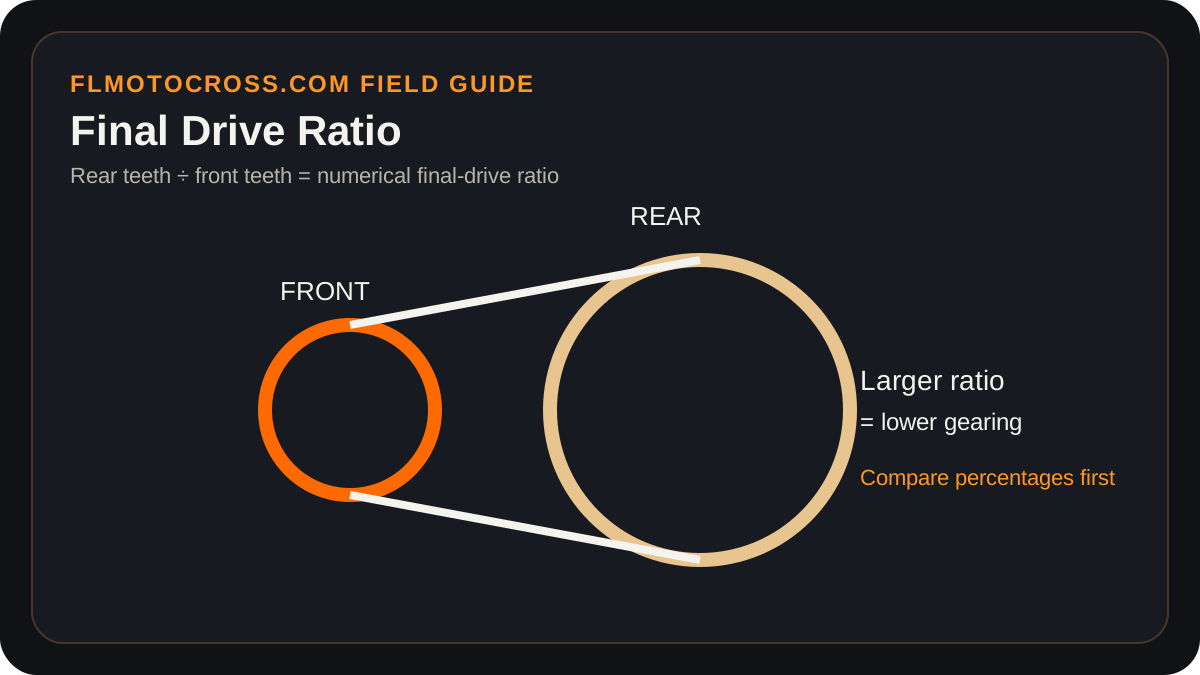
Final-drive ratio is rear sprocket teeth divided by front sprocket teeth. A larger numerical ratio—larger rear or smaller front—is lower gearing: more torque multiplication and less wheel speed at a given engine rpm. A smaller numerical ratio is taller gearing. The FLMotocross calculator shows the percentage change so you can compare 13/50 with 13/51, 13/52 or 14/52 without guessing.
One tooth on the front creates a larger percentage change than one tooth on the rear. Front-sprocket changes can also affect chain bend radius and clearance, so do not choose solely because the part is cheaper.
Lower is not always better
If lower gearing makes the bike hit the limiter or forces an extra shift on every straight, the theoretical torque advantage may make the lap harder. Too-short gearing can also make throttle feel abrupt and promote wheelspin. A taller gear with smoother drive may find more traction in loose sand.
Test the change by shift count and corner exit. If you can carry one gear through a section that previously required a shift and the bike stays responsive, the gearing change may be useful even if top speed decreased.
Check fit after the ratio decision
Sprocket changes can affect chain length, axle position, chain guide alignment and clearance. Large rear sprockets may require a longer chain. After installation, set chain slack according to the motorcycle procedure, torque hardware correctly and verify the wheel/chain guide rotates freely.
Use quality sprocket hardware and inspect locking devices. A sprocket change is drivetrain work, not merely a tuning experiment.
Keep track-specific gearing notes
Florida tracks vary. A tight deep-sand layout may favor a different ratio than a fast groomed track with long straights. Save gearing with track and condition in your bike setup log so you can return to a known combination.
If the rider’s pace changes substantially, revisit gearing. The ratio that helped a beginner avoid bogging may feel too short once corner speed improves.
Track-specific rules always win
Use this guide as preparation, then follow the riders’ meeting, posted rules and staff instructions at the facility you visit. Conditions and operating procedures vary by track and event.
Related rider guides
A process for testing pressure, sag and clicker changes without losing your baseline.
A controlled setup approach for Florida deep sand that emphasizes baseline, traction and rider feedback instead of random clicker changes.
How to approach traction, tire pressure, braking stability and suspension feedback when a Florida surface becomes firm, polished or slick.
Understand the jobs of springs, sag and damping so setup changes answer a specific symptom instead of becoming random clicker movement.