
2-Stroke vs 4-Stroke Motocross Bikes: What Actually Changes at the Track
Compare power delivery, engine braking, maintenance workflow, fuel habits and riding feel without pretending one engine type is automatically better.
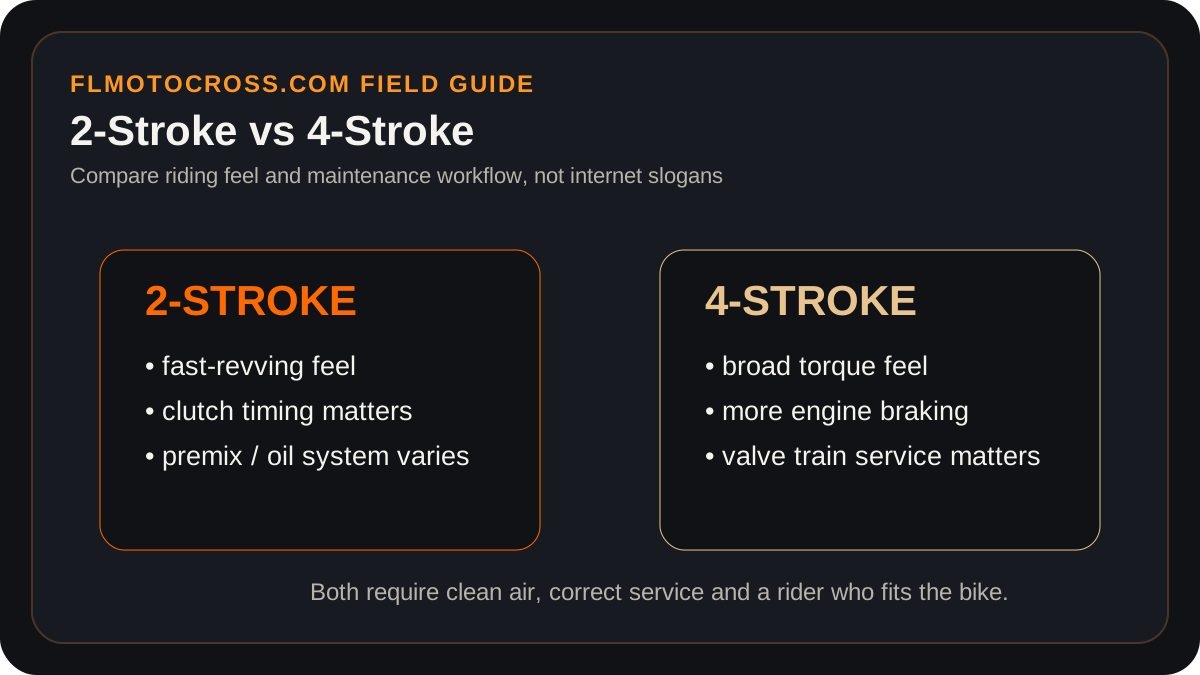
Power delivery changes how you ride the same section
A modern two-stroke and four-stroke can both be fast, but they ask different things from the rider. Two-strokes often reward precise clutch and throttle timing because the engine can move through its useful rpm range quickly. Four-strokes usually provide a broader torque feel and stronger engine braking, which can make corner entry and traction management feel different. Neither characteristic is universally easier; riders adapt their braking points, gear choice and body timing to the motorcycle.
In Florida sand, maintaining momentum is important on either engine type. A two-stroke rider may use clutch work to keep the engine responsive when the surface drags speed away. A four-stroke rider may lean on torque and choose a gear that keeps the rear tire driving without abrupt wheelspin. The fastest setup is the one the rider can repeat lap after lap, not the one with the most impressive dyno number.
Maintenance is a system, not a stereotype
The common shorthand says “two-strokes need top ends, four-strokes need valves,” but real ownership is more detailed. Both need clean air, correct fueling, fresh fluids where specified, cooling-system health, wheel and chassis maintenance and a reliable service log. Two-stroke top-end service can be comparatively straightforward on many models, while four-stroke valve-train and cylinder-head work can be more complex. The exact interval depends on the motorcycle, use and manufacturer guidance.
Air-filter discipline matters especially in Florida. Sand and dust entering through a poorly sealed filter can shorten engine life regardless of cycle type. A rider who services the filter correctly after dusty days and tracks engine hours may spend less overall than someone with a supposedly “reliable” bike that receives random maintenance.
Fuel and pit routine are different
Premix two-strokes require the correct oil ratio for the engine/oil setup and careful labeling of fuel containers. Fuel-injected oil-injection systems, where fitted, have their own checks. Four-strokes simplify the fuel jug but still need clean, fresh fuel of the appropriate grade and a plan for storage. Do not change premix ratio as a substitute for correcting jetting or fuel mapping; changing oil percentage also changes the fuel portion of the mixture.
At the track, the practical question is whether your routine is consistent. Measure fuel, label containers, keep dirt away from caps and funnels, and know roughly how much the bike uses per session. The FLMotocross premix and fuel-planning tools can handle the arithmetic, but they cannot choose a manufacturer-specific ratio or fuel specification.
Rider feel matters more than internet arguments
Some riders like the lighter-feeling response and free-revving character of a two-stroke. Others prefer the traction feel and predictable torque of a four-stroke. Engine braking can help one rider settle a corner and disrupt another rider’s rhythm. The only useful comparison is how well the bike lets you hit marks, maintain form and recover from mistakes on the tracks you actually ride.
If possible, ride both types in a controlled practice environment before buying. Ten calm laps focusing on starts, braking, a few representative corners and a rough section can tell you more than hours of online debate. Pay attention to fatigue, clutch use, missed shifts and whether the motorcycle feels busy or natural.
Choose around ownership goals
For a first race season, parts availability, local mechanical support, resale value and your willingness to perform maintenance can matter as much as lap feel. If you enjoy doing top-end work and want a simpler engine architecture, a two-stroke may fit. If you prefer the torque character of a four-stroke and have access to competent valve-train service, that may fit better. There is no universal winner.
Write down three priorities—riding feel, maintenance comfort and total season budget—and rank candidate bikes against those priorities. A deliberate choice is more useful than buying whichever engine type is currently fashionable.
Track-specific rules always win
Use this guide as preparation, then follow the riders’ meeting, posted rules and staff instructions at the facility you visit. Conditions and operating procedures vary by track and event.
Related rider guides
A practical way to choose a Florida track, understand practice flow, and avoid making your first motocross day harder than it needs to be.
Track entry, passing, flags, staging and pit behavior explained before your first open-practice day.
A practical first-bike guide that puts rider fit, controllability, maintenance and where you will actually ride ahead of bench-racing horsepower.
How to evaluate a used dirt bike systematically so cosmetic condition does not hide expensive engine, chassis or maintenance problems.