
Motocross Starting Gate Basics: Staging, Body Position and First-Turn Planning
How to approach starts as a repeatable process instead of a single high-stress launch.
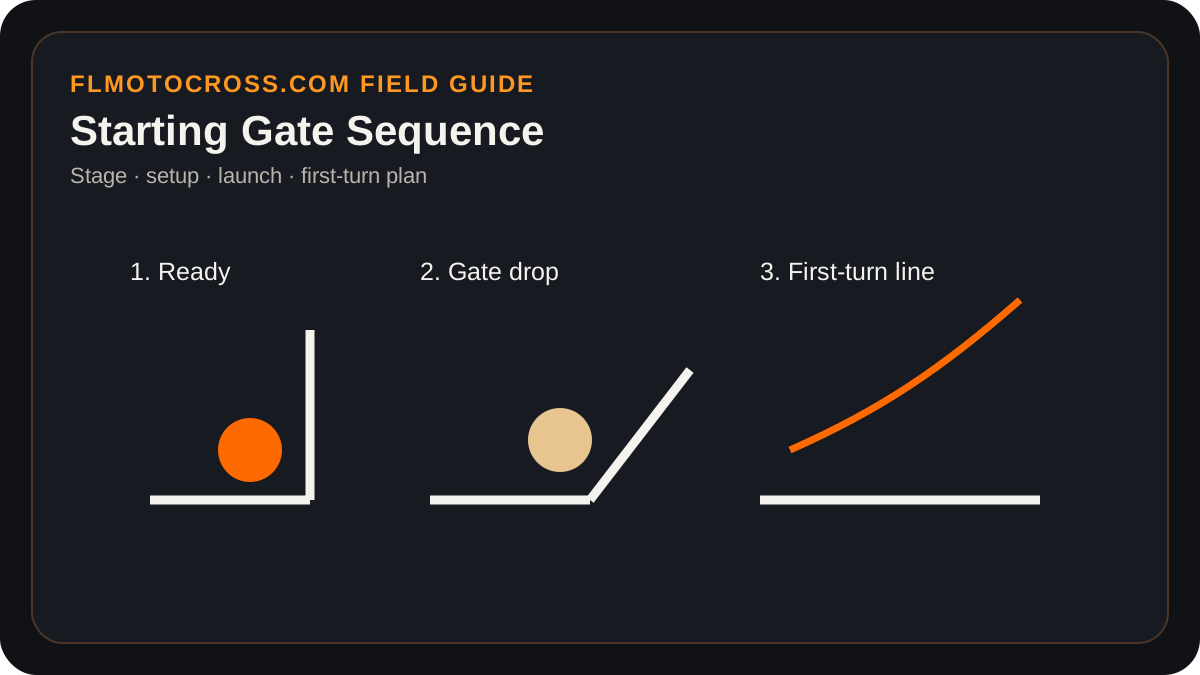
Learn the event’s staging procedure first
Race starts begin long before the gate drops. Know when your class is called, how riders enter staging, whether gate picks are assigned, and what signals the official uses. Missing a call or rushing into position creates stress that makes the launch worse. Listen at the riders’ meeting and follow official instructions because procedures vary by event.
If you are practicing starts outside an event, use a controlled designated area. Never create an improvised start across active pit traffic or a shared practice line.
Choose a gate with the first turn in mind
The shortest geometric distance to turn one is not always the best gate. Surface condition, rut quality, traction behind the gate and the approach angle all matter. Inspect the legal preparation area if rules allow and choose a position you can launch from consistently.
For a new racer, a slightly less crowded gate position may reduce first-turn chaos. The objective of early races is learning complete motos, not forcing an expert-level holeshot decision every time.
Set controls and body position before the board turns
Be in the correct gear, verify goggles are clear, settle feet and hands, and establish a body position that keeps the front controlled while allowing drive. Avoid last-second lever or goggle adjustments once the start sequence has begun. Riders often lose starts because they were not ready, not because their reaction time was slow.
Keep attention on the official start signal or gate mechanism specified for the event. Do not watch neighboring riders; their movement can trigger a false reaction.
Launch smoothly enough to keep traction
The exact clutch/throttle technique depends on motorcycle and surface. Practice finding the engagement point and throttle level that accelerates without excessive wheelspin or front lift. Florida sand may require different launch behavior from hard packed clay. Use repeatable practice starts to develop feel.
Once moving, complete the launch before making aggressive cross-track moves. Be aware of riders on both sides and hold a predictable line toward the first turn.
Treat the first turn as part of the start
A perfect launch that ends in a first-turn crash is not a good start. Plan braking point, inside/outside options and where traffic is likely to compress. New racers often gain more positions by staying upright through the first two corners than by forcing a gap that disappears.
After each race, note one start variable to improve—reaction, wheelspin, body position, gate choice or first-turn decision. That turns starts into a trainable skill rather than a mystery.
Primary references
Track-specific rules always win
Use this guide as preparation, then follow the riders’ meeting, posted rules and staff instructions at the facility you visit. Conditions and operating procedures vary by track and event.
Related rider guides
A plain-language introduction to common flag signals—with one rule above all: follow the facility’s riders’ meeting and staff instructions.
Registration, tech, staging, starts, schedules and paddock pressure are different from ordinary practice.
A first-race walkthrough that helps a practice rider understand the schedule, paperwork and race-day flow before arriving at the gate.
Build a race-day schedule backward from staging calls so registration, practice, maintenance and recovery do not become emergencies.